
Your kid gets the ball and the whole world disappears. Teammates waving. Coach calling. And your child? Dribbling. Still dribbling. Going for the shot again. If you’ve been in those bleachers doing the slow cringe behind your sunglasses, you are not alone.
Welcome to the ball hog phase.
Why Kids Won’t Pass Basketball (And What It Really Means)
Almost every beginner goes through it. And here’s the thing most parents don’t realize right away: the kid who won’t pass basketball is often the kid who cares the most. They practiced. They want to prove it. They are invested in a way that a lot of kids that age simply aren’t yet.
That’s not a character flaw. That’s competitive drive before it’s been shaped into something useful.
The problem isn’t that they’re selfish. The problem is that nobody has shown them yet that passing can make them look even better than scoring. Nobody explained that the player who gets the assist is just as valuable as the one who gets the basket. That’s our job to deliver. And it lands a lot better off the court than in the middle of a game when emotions are running hot.
I’ve been through this with my own boys. Jeremy went through a stretch around age seven where he was convinced every possession ended with him taking the shot. He had the skills to back it up, which honestly made it harder. How do you tell a kid who is genuinely good to hold back? You don’t tell them to stop being good. You reframe what “good” actually looks like.
Good means your teammate scored too. Good means your team won. Good means Coach is looking at you differently because you made the whole team better. That’s the shift you’re after.
How to Coach Sharing Without Ruining the Ride
Here’s what the research says: according to the Positive Coaching Alliance, kids who understand their role within a team context early are more likely to stay in sports longer and develop stronger leadership skills over time. The court is not just where they dribble. It’s where they learn to read a room, trust other people, and let go when it’s not their moment. That’s a life skill with a basketball wrapper.
So how do you get there practically?
Stop watching only your kid during practice. Watch who else is on the floor. Then, on the drive home (not at the gym, not in front of teammates), ask your kid what they noticed. Did they see number 7 open on the left? Do they know what an assist is? Make them curious about the full picture, not just their own highlight reel.
Keep the conversation low-stakes and curious. “Hey, I noticed your teammate was open a few times. What do you think would have happened if you passed to her?” That question opens a door. Lecturing slams it shut.
Hog Baller: The Book That Does the Coaching for You
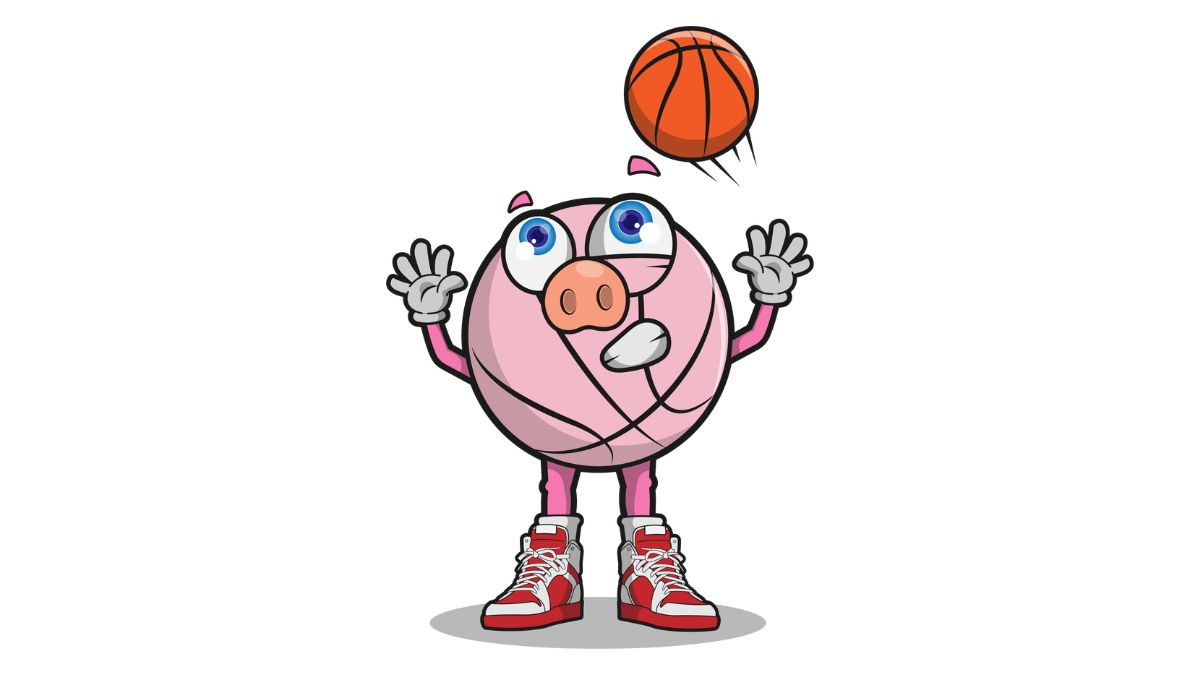
There’s a Lil Baller character built exactly for this moment. Hog Baller is a pink basketball with a pig snout and wide, caught-in-the-act eyes. The second your kid sees that face, they recognize him. Because he’s them, on their most selfish day on the court, and they know it.
In the story, Hog Baller practiced harder than anyone. He improved faster than his friends. He showed up to tryouts ready to prove himself, and Coach Swish was genuinely impressed by his skills. Then the game started. Teammates waved for passes. Hog Baller kept dribbling. Coach Swish watched. His friends walked home quiet.
The turning point is everything. Hog Baller sees his teammates not talking to him and realizes he’s been so focused on showing off that he forgot to actually play with them. The next day, he apologizes. He passes. He doesn’t score as many points, but the reaction from his teammates is something he’s never felt before. Coach Swish looks proud. Hog Baller makes the team. And the lesson settles in: the best player on the court is the one who makes the players around them better.
That message, delivered through a cartoon pig basketball in eight minutes at bedtime, hits differently than anything a parent can say in the car. That’s the whole point.
Grab Hog Baller on Amazon for $11.50, less than your post-game snack run.
Already on Kindle Unlimited? Read it free here.
Sport Parenting Hack: The Three-Pass Rule
Try this at home this week. Before your kid can shoot in any backyard game or driveway session, they have to pass the ball three times first. Make it a rule, make it a game, make it non-negotiable. It sounds simple, but it rewires the instinct in a low-pressure environment where there’s nothing to prove. By the time they get to practice or a real game, finding the open player starts to feel natural instead of like a sacrifice.
Bonus: it works on siblings too. Which is its own kind of miracle.
Conversation Starter for Tonight
Ask at dinner or on the drive home: “If you had the ball and your friend was wide open, what would you do? Why?”
Let them answer. Don’t jump in right away. The best coaching happens at the table or in the car, not during the game. Give them space to think out loud and you’ll be surprised what they already know.
Want a free Hog Baller coloring sheet and weekly sport parenting tips? Join the Lil Baller village at lilballerbooks.com.
Browse all 24 Lil Baller characters at the Etsy shop: etsy.com/shop/lilballerbookshop