You’re grabbing the water bottle, tying their shoes, keys in hand. And then it hits. The lip quiver. The crossed arms. The dreaded words: “I don’t want to go.”
If your kid doesn’t want to go to basketball practice, take a breath before you react. This moment happens to almost every sport parent, and how you handle it matters more than you think.
Your Kid Doesn’t Want to Go to Basketball Practice: Here’s Why
Here’s the thing most parents get wrong: they assume their kid doesn’t like basketball anymore. Nine times out of ten, that’s not it. The resistance isn’t about the sport. It’s about something underneath.
Maybe they’re afraid of messing up in front of their friends. Maybe a kid said something last week that stung. Maybe they’re just tired from a long school day and the couch feels safer than the gym.
I’ve been through this with all three of my boys. Ryan, Jeremy, Nathan: different personalities, same moment at different ages. Nathan was the one who would physically plant himself on the stairs and refuse to put his shoes on. My first instinct was to push. “You’re going. End of discussion.” And sometimes that’s the right call. But I learned that the push works better when it comes with a pause first.
The research backs this up. According to the Positive Coaching Alliance, one of the top reasons kids quit sports is fear of failure and embarrassment, not lack of interest. When your child says “I don’t want to go,” they might really be saying “I’m scared I won’t be good enough.”
What to Say (And What to Skip)
Skip this: “You made a commitment and you’re going.” That’s not wrong, but leading with it shuts down the conversation before it starts.
Try this instead: “I hear you. What’s the part you’re not looking forward to?”
That one question changes everything. You’re not caving. You’re not canceling practice. You’re opening a door so your kid can tell you what’s actually going on.
Once you know the real issue, you can coach through it. If it’s nerves about making mistakes, remind them that every single player on that court messes up. If it’s a social thing, talk through it on the drive over. If they’re just exhausted, acknowledge it: “I know you’re tired. Let’s see how you feel after the first five minutes.”
Here’s my rule of thumb: get them there. Almost every time, five minutes into practice, they’re fine. The hardest part is walking through the door.
How Nervous Baller Learned to Walk Through the Door
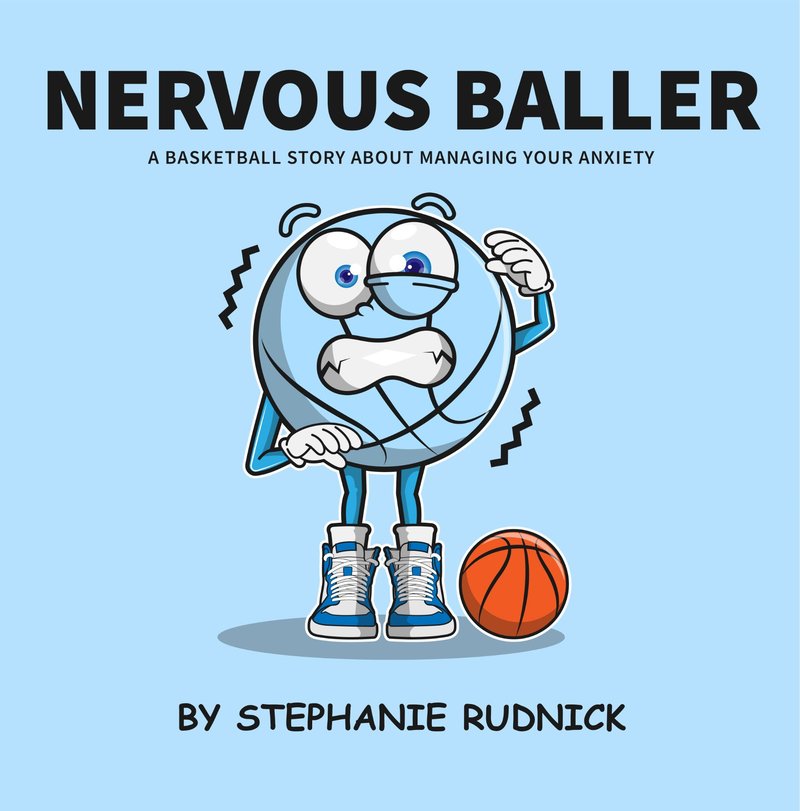
This is exactly why I wrote Nervous Baller. He’s a light blue basketball character who loves watching the game with his brothers but is terrified of actually playing. He worries about everything: waking up late, messing up at school, getting laughed at by friends.
When basketball sign-ups come around, Nervous Baller wants to try out, but his heart races. His hands shake. Sound familiar?
His friend Tiny Baller notices and shares something simple: “When I feel nervous, I take deep breaths and remind myself that everyone makes mistakes.” And Coach Swish reinforces it when Nervous Baller misses his first shot at tryouts: “Everyone misses sometimes. Take a deep breath and try again. The important thing is to keep trying.”
By the end of the story, Nervous Baller makes the team. Not because he stopped being nervous, but because he showed up anyway. That’s the lesson. Courage isn’t the absence of fear. It’s lacing up your sneakers when your stomach is doing backflips.
Kids hear that differently when it comes from a character instead of Mom or Dad. That’s the whole point of the Lil Baller series: sometimes the message lands better from a cartoon basketball than from the person making them eat their vegetables.
Sport Parenting Hack
Next time your kid resists practice, try the “five-minute deal.” Tell them: “Let’s just go for five minutes. If you still want to leave after five minutes, we’ll talk about it.” In my experience, they never want to leave. Once they’re moving, the anxiety melts. The five-minute deal respects their feelings without letting fear make the decision.
Conversation Starter
On the drive home from practice (or at bedtime), ask your kid: “What’s one thing that felt hard today, and one thing that felt good?” It normalizes that hard and good can exist in the same practice. That’s a life skill, not just a basketball skill.
Grab the Book
Get Nervous Baller on Amazon for $11.50, less than a post-game juice box. It’s the perfect bedtime read for any kid who gets butterflies before practice, games, or new situations.
Already on Kindle Unlimited? Read it free here.
Want a free coloring sheet and weekly sport parenting tips? Join the Lil Baller village.
Enjoy the journey, because every baller starts somewhere.
Stephanie Rudnick
Author, Lil Baller Books | Founder, Elite Camps
lilballerbooks.com
Find Lil Baller merch and coloring books on our Etsy shop.